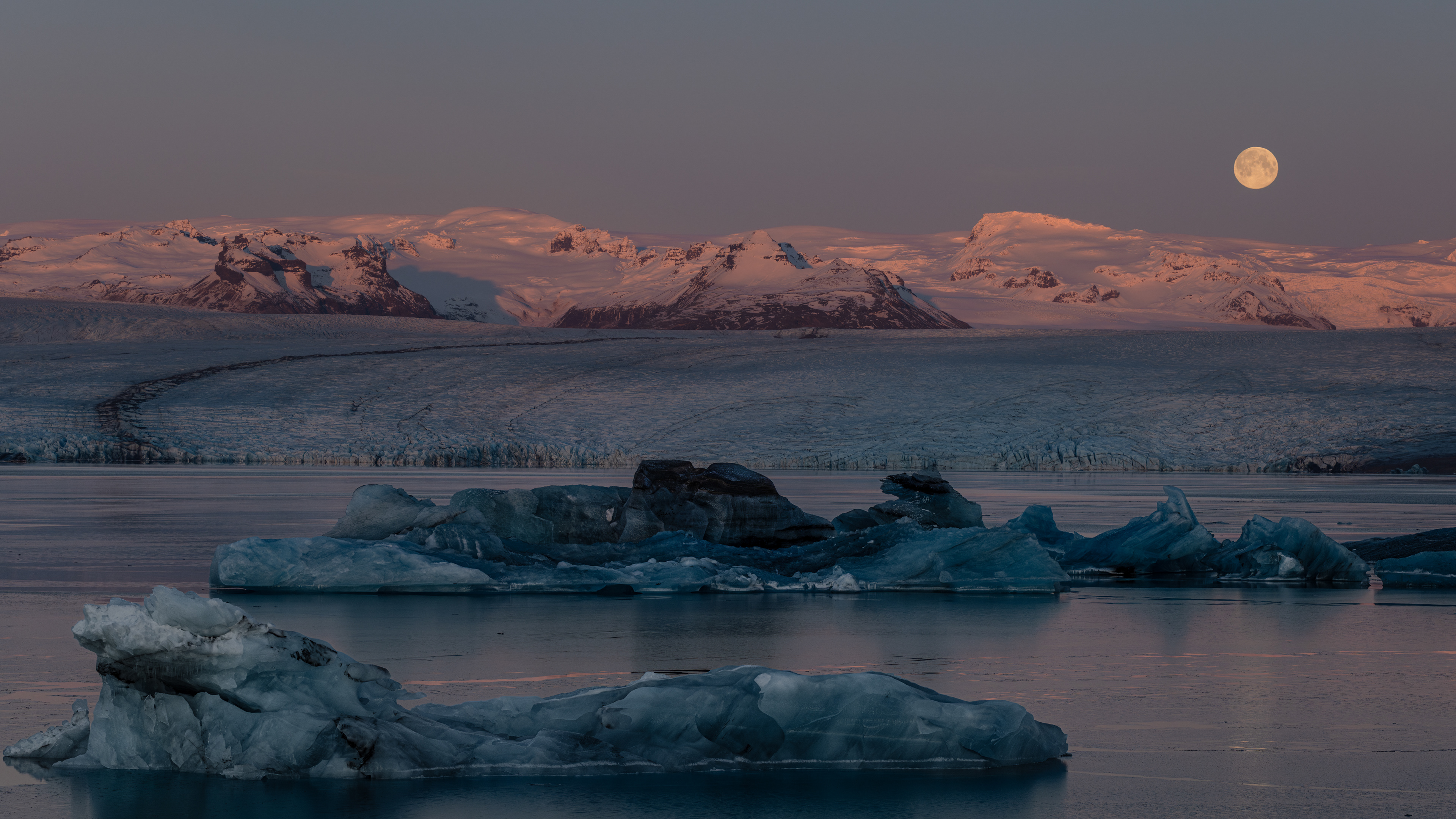
Full moon by the Glacier Lagoon in Iceland in early morning January light
From the moment you step out of your vehicle, the sharp crack of a calving iceberg echoes across Jökulsárlón Glacier Lagoon. The hiss of the tide against the massive icebergs fills the air, immersing you instantly into the wild serenity of the place. Jökulsárlón is one of those places in Iceland where photography feels almost effortless, not because it is easy, but because the subject matter keeps reinventing itself in front of you. The lagoon is an iceberg-filled glacial lake in southeast Iceland, right by the Ring Road, and that accessibility is part of the story. You can stand close to a glacier tongue and watch icebergs drift without traveling into remote wilderness or committing to a long hike. For a photographer, that combination is rare: a world-class subject that you can revisit again and again, in different weather, different light, and different seasons, and still come away with new work.
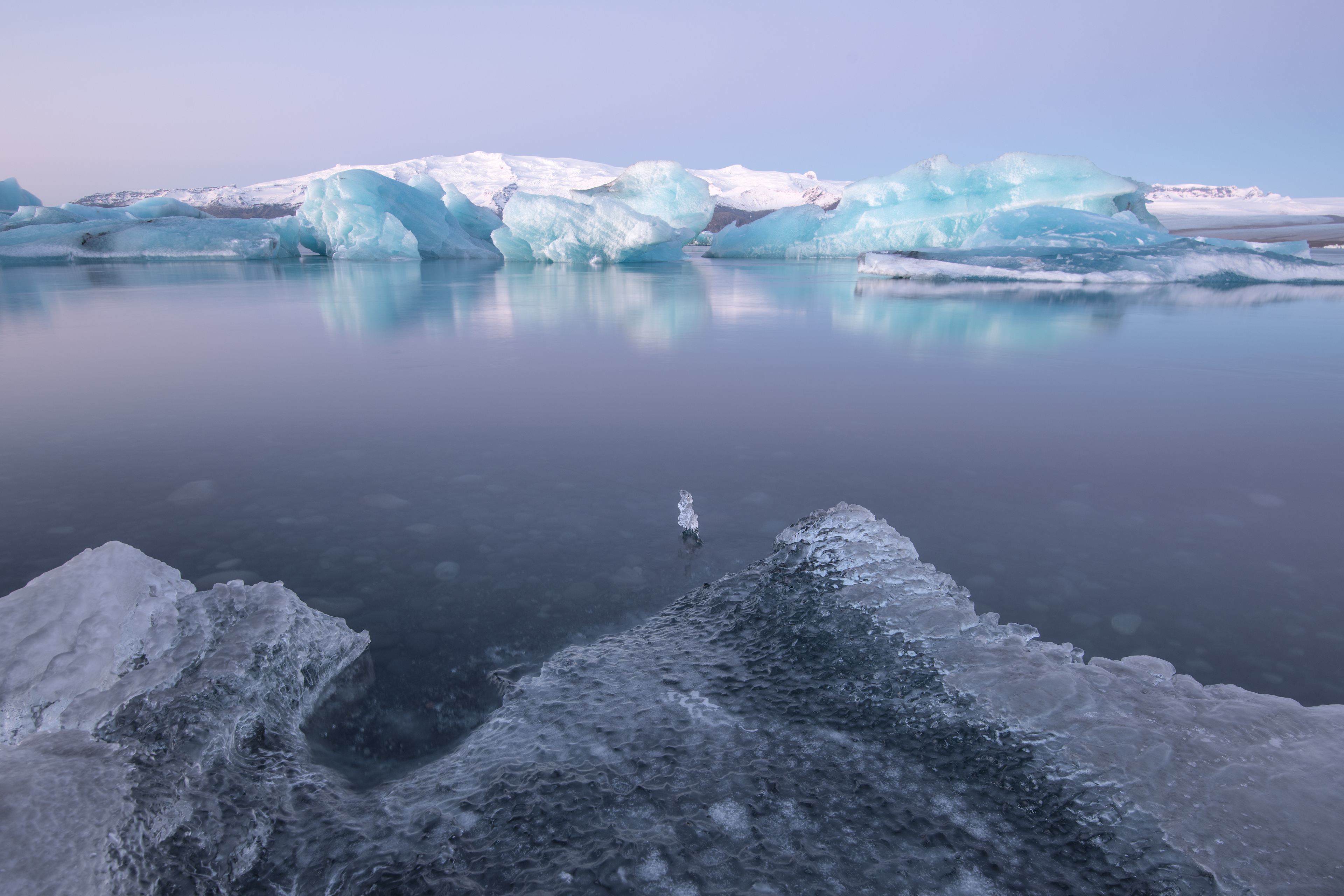
Jökulsárlón on a calm day early in autumn
The lagoon itself is a young phenomenon in geological terms. Since the mid-1980s, the glacier tongue has steadily retreated, pulling back nearly 8 kilometers from the coastline. The low hills you see north of the Ring Road as you approach from the west are moraines, built as the glacier pushed and shaped the ground over long periods. When temperatures shifted and the glacier began to retreat, a basin filled with meltwater formed and became the lagoon we know today. Jökulsárlón is not a fixed landmark like a waterfall that looks essentially the same decade after decade. It is a living system that changes with temperature, precipitation, wind, and tides, and that is why it is so addictive for photographers who enjoy returning to the same place to find it transformed.
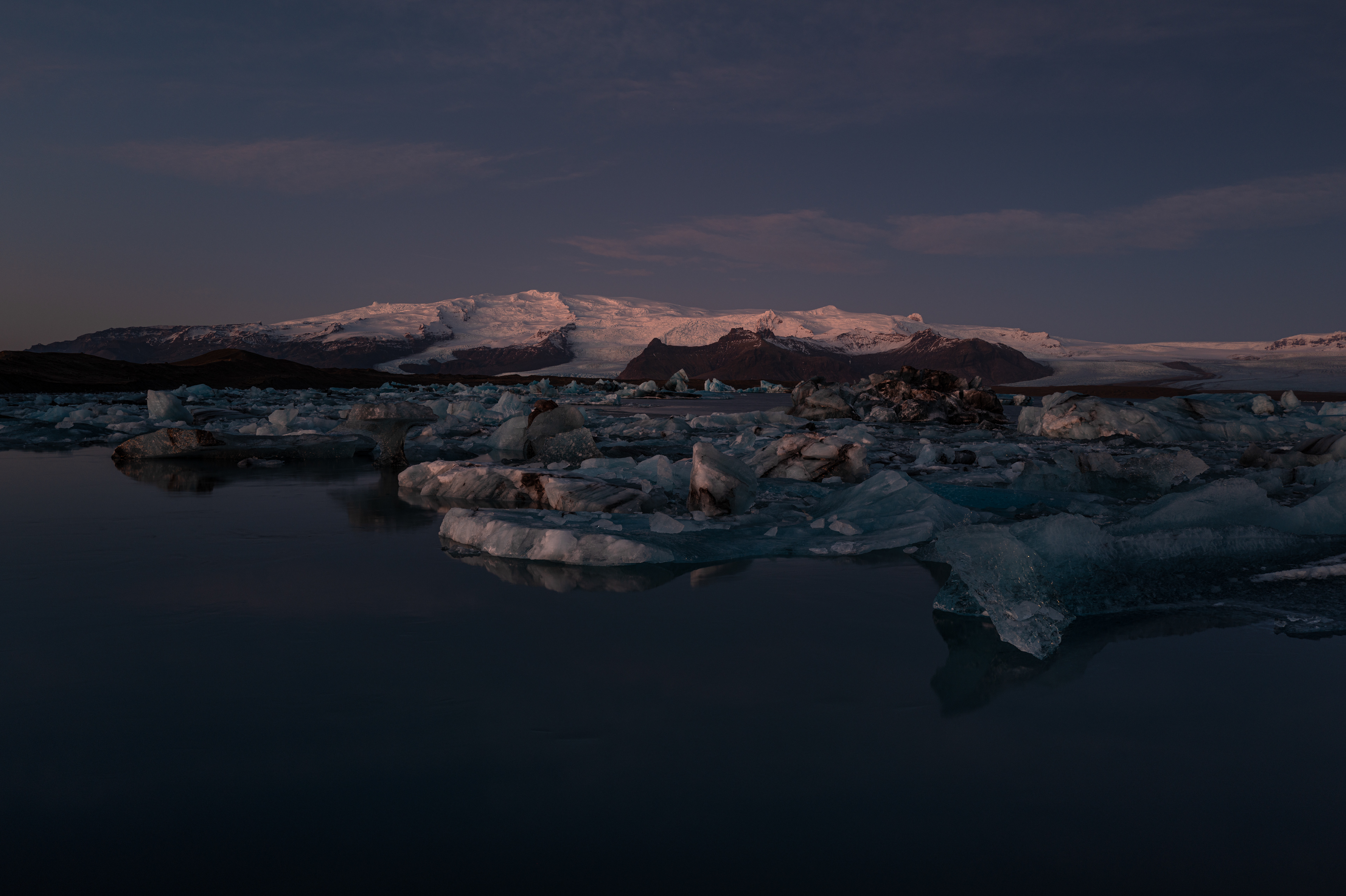
Early morning shot on the 2nd of January 2026
The ocean is a central part of the visual drama at Jökulsárlón. The lagoon sits at sea level and connects to the Atlantic through the short glacial river Jökulsá, right by the bridge on the Ring Road. The tide pushes and pulls seawater into the lagoon and back out again, and that movement influences where the ice gathers, how it rotates, and how it drifts. Even if you arrive with a clear idea of what you want to photograph, the lagoon will often rearrange the foreground while you are standing there. On some days, the icebergs crowd the shoreline, and the scene is busy and energetic; on other days, the lagoon feels minimal and quiet, with isolated shapes and long stretches of open water. If you stay long enough, you can feel the place “editing” itself, and the compositions you thought were impossible suddenly appear.
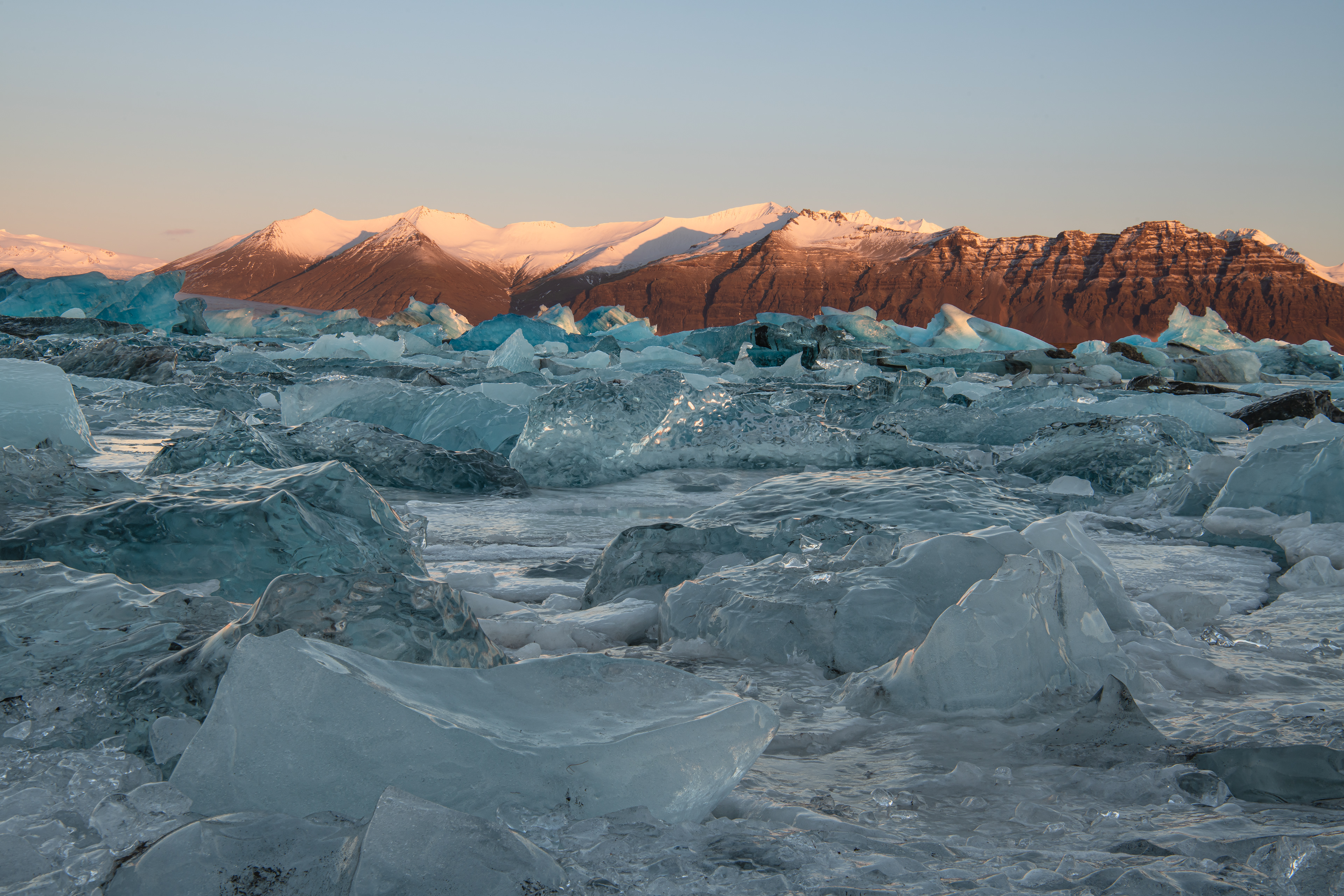
Late in autumn the light gets more red and pink as the sunlight is lower
Light is the real main subject at Jökulsárlón, and it is what separates routine tourist photos from images that feel deliberate and personal. In winter, the sun stays low and the day is short, which creates long periods of twilight and gentle directional light. That low angle sculpts the ice, reveals texture, and gives the lagoon a soft, controlled mood that can look almost like studio lighting. When the sky goes pale violet, pink, or steel-blue, the lagoon becomes quietly cinematic, and even simple frames can carry atmosphere. Winter also demands discipline with exposure because bright ice against dark water and dark mountains can push dynamic range hard. If you blow the highlights in the ice, the image collapses quickly, because the subtle tones and textures are exactly what make the ice feel real. Start at -0.7 EV and bracket three shots to manage the dynamic range effectively. This immediate takeaway helps in controlling highlights and retaining the delicate details in the ice.
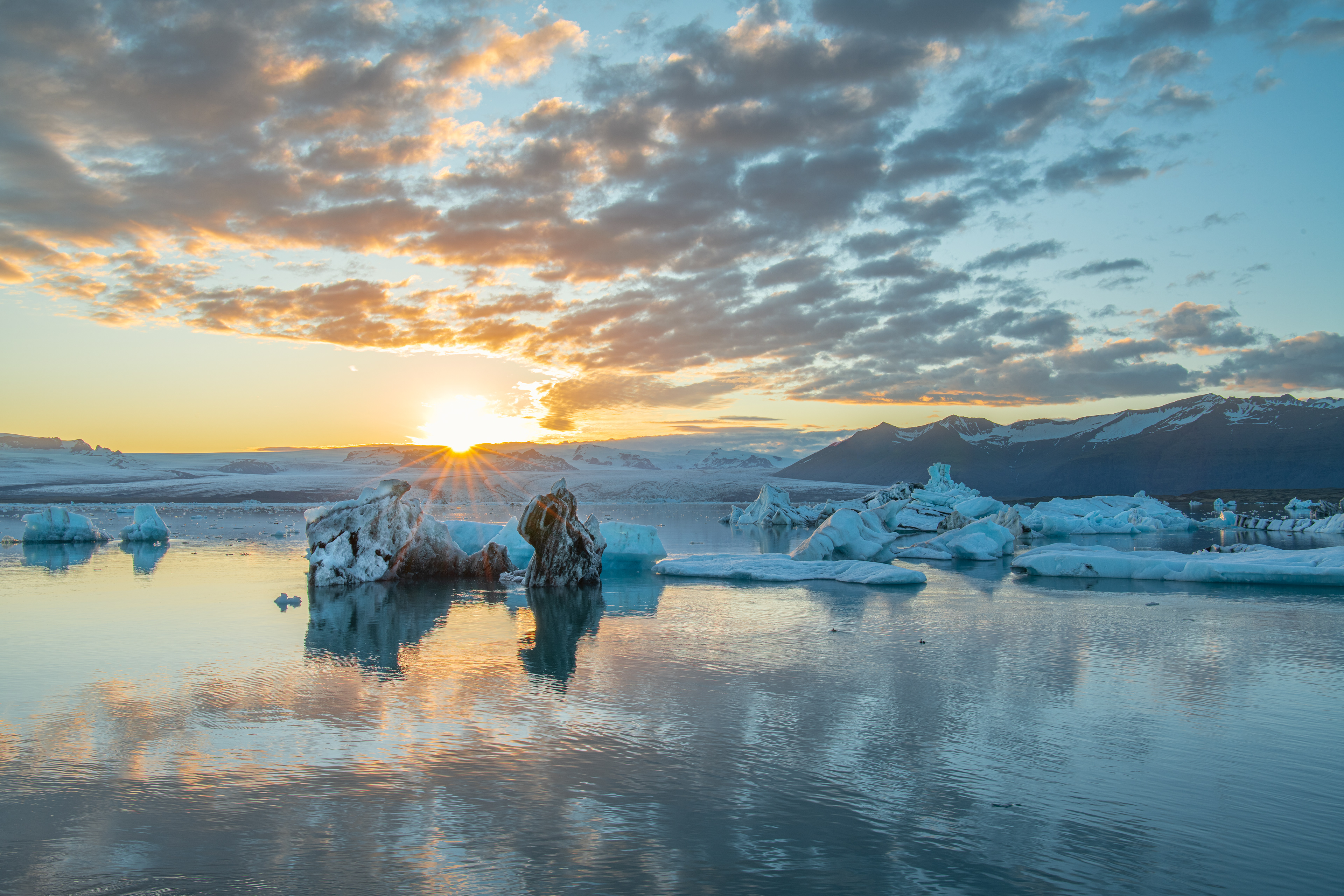
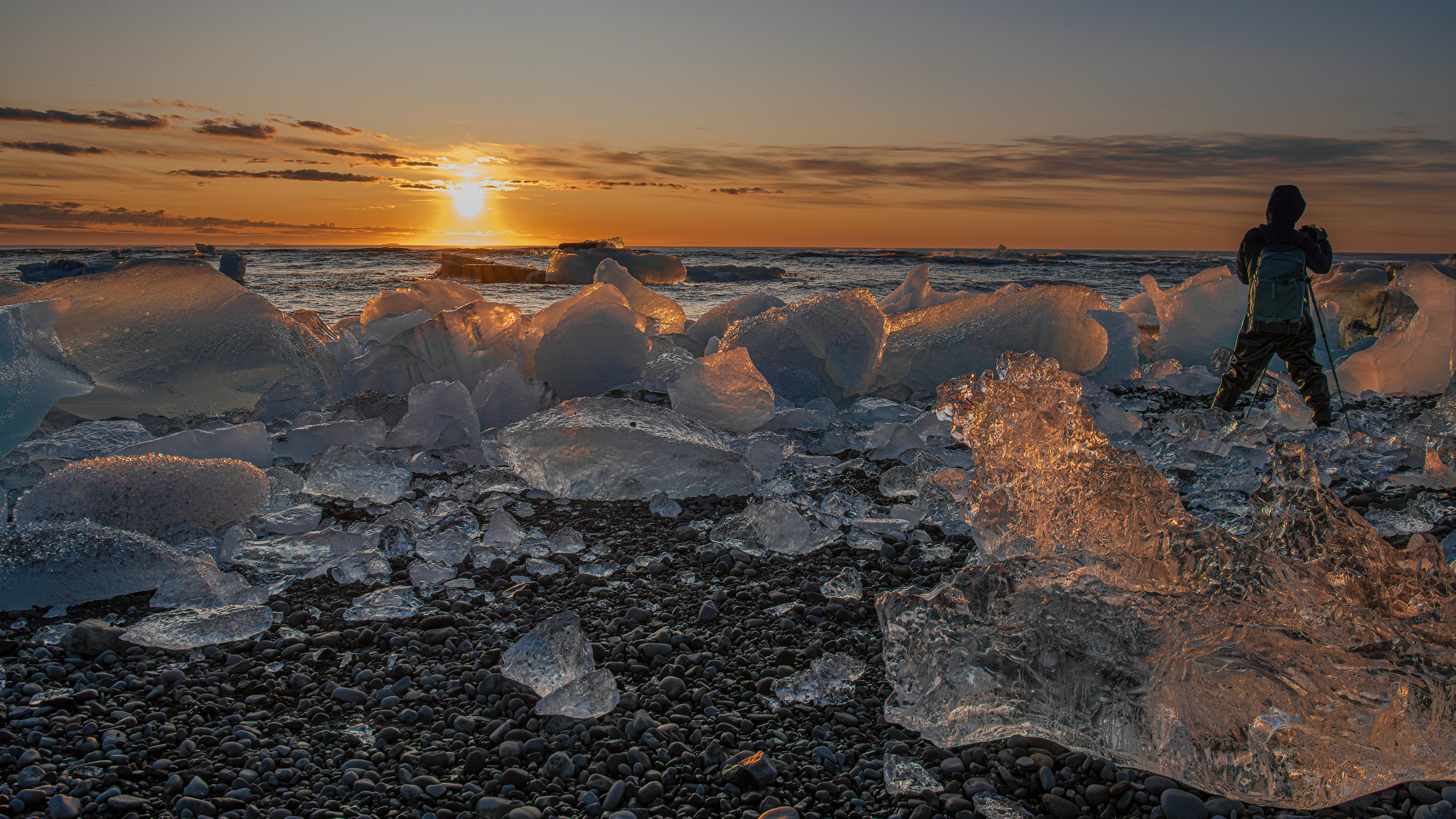
In summer the sunset is north of the lagoon on top of the glacier Vatnajökull
Summer is a different kind of gift. The long days allow you to work slowly, to return to the same viewpoint several times, and to wait for light rather than chasing it. The late-night and near-midnight light around midsummer can be stunning, especially when the wind eases and reflections settle. At the same time, strong midday sun can be harsh on ice, creating glare and flattening form, so the best strategy is often to shift your approach. Instead of forcing a grand wide-angle scene when the light is brutal, it can be smarter to concentrate on details, abstracts, and tighter compositions where shape and contrast do the work. Autumn and early winter often feel like a sweet spot because you get low light again, fast-changing weather, and richer color potential, while darkness returns for aurora opportunities.
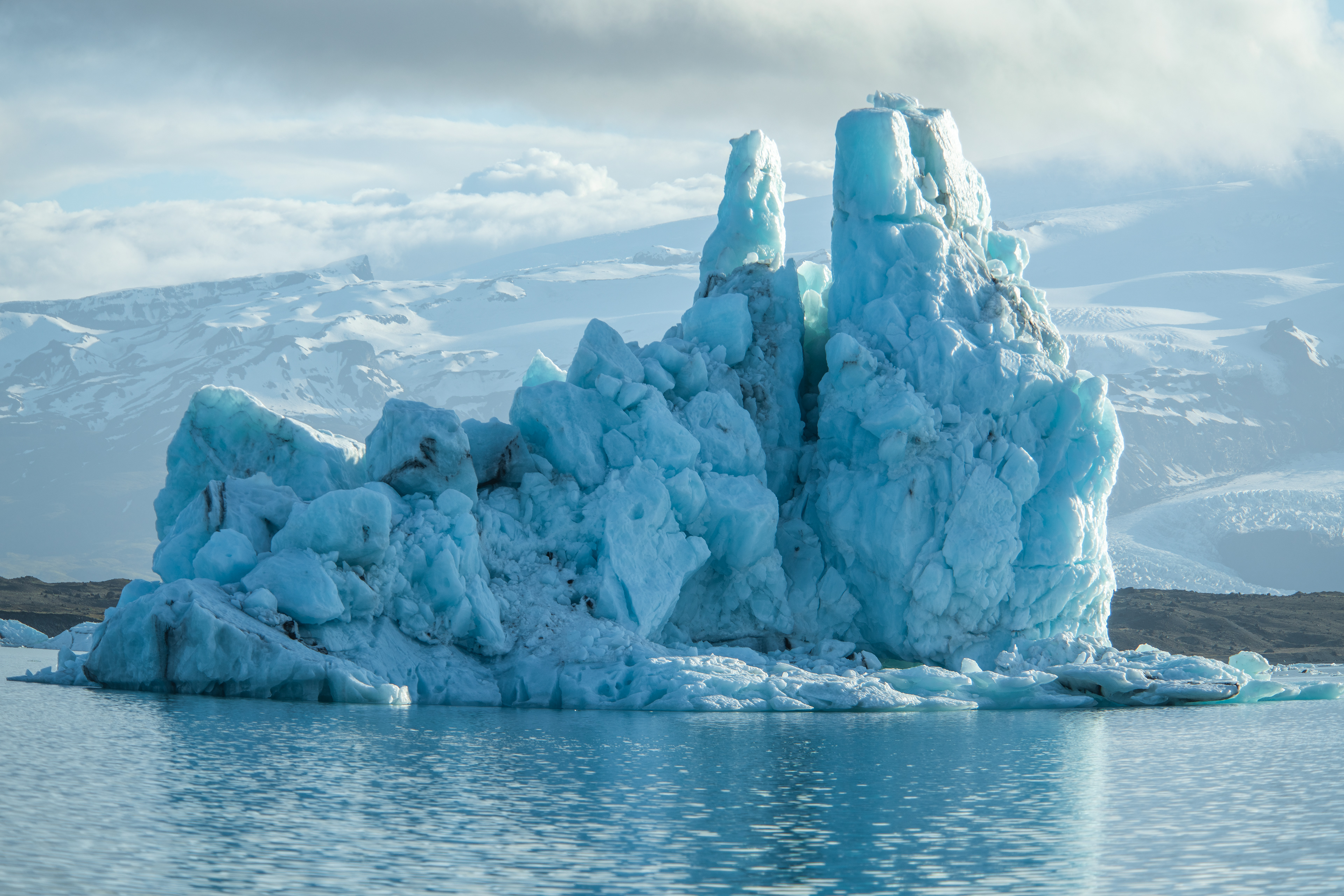
In summer the sunset is north of the lagoon on top of the glacier Vatnajökull
Northern Lights at Jökulsárlón can be extraordinary, but it is not an automatic win. The lagoon can provide foreground ice shapes, a distant glacier tongue, and sometimes reflective water, which together can create a complete image rather than just a sky event. The weakness is the wind. If the water surface is restless, reflections break apart, and the scene becomes less coherent, so aurora photography here often becomes a game of finding calmer pockets of water and composing quickly while the display evolves. When it works, the combination of moving light in the sky and still, sculptural ice in the foreground can be unforgettable.
One of the joys of photographing Jökulsárlón is that you can work it on multiple levels, from grand landscapes to intimate abstracts. Wide-angle images can be powerful when the light is low and directional, and the sky has structure, because the glacier tongue, the lagoon, and the ice can lock together into a complete sense of place. Telephoto work is just as rewarding because it simplifies the chaos and lets you isolate single icebergs, layers of blue ice, cracks, bubbles, and ash-streaked surfaces. The lagoon sometimes produces dark or even nearly black icebergs, stained by volcanic ash from past eruptions, and these can become strong graphic subjects when you treat them as form and tone rather than as scenery.
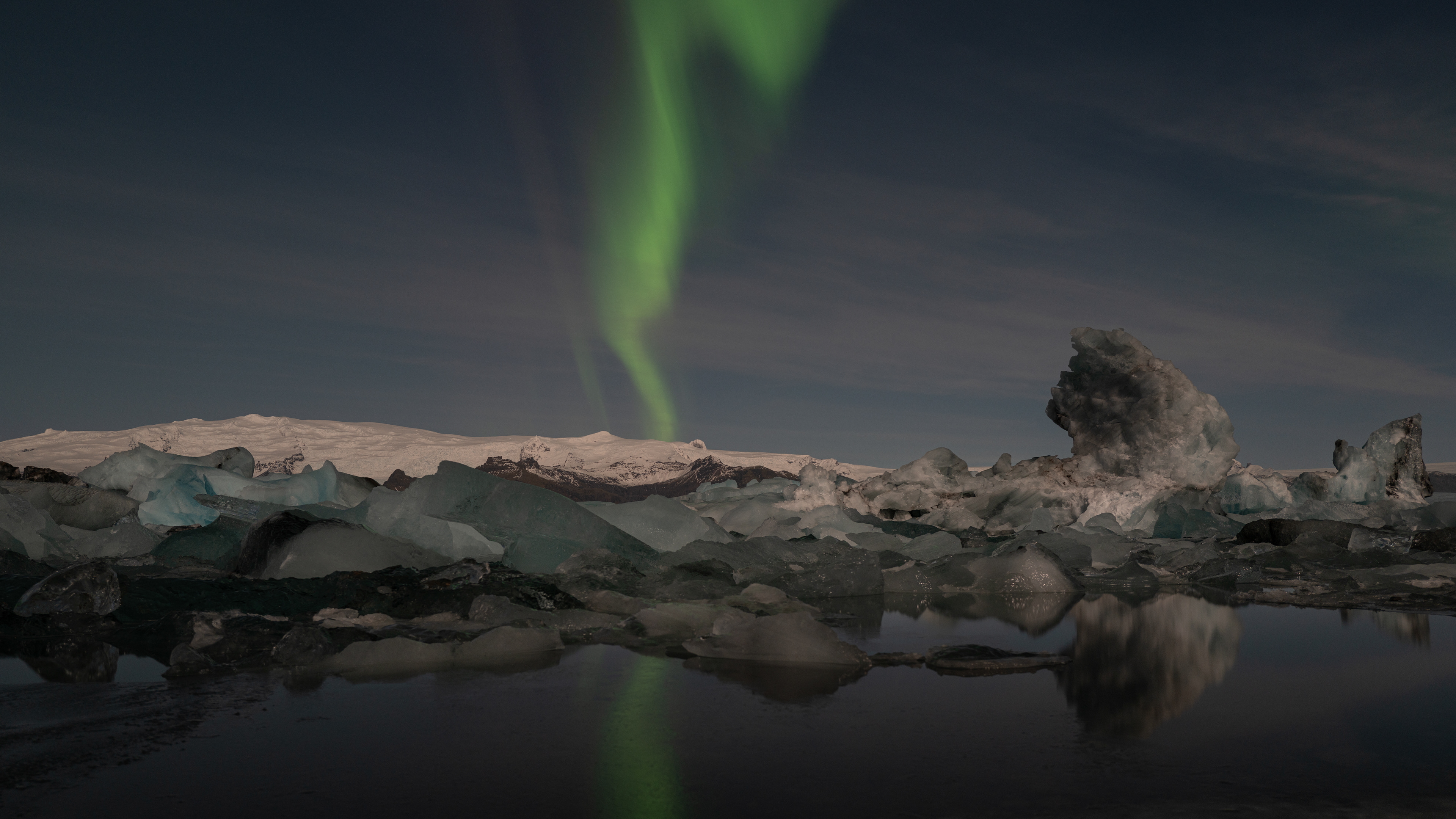
Northern Lights at Jökulsárlón Glacier lagoon
The bridge area deserves time because the current can produce movement, patterns, and a sense of energy that contrasts with the stillness you often find elsewhere around the lagoon. The currents beneath the bridge can pull ice toward the river, and if you pay attention, you can see the system working in real time. Diamond Beach, where ice ends up on black sand, offers a completely different visual language, more graphic and contrast-driven, and it can be a perfect place to work with minimal compositions and close-up details. It is also a place that demands respect because waves and shifting ice are not predictable. If you want to photograph there, you do it with awareness, patience, and a safe distance from the water.
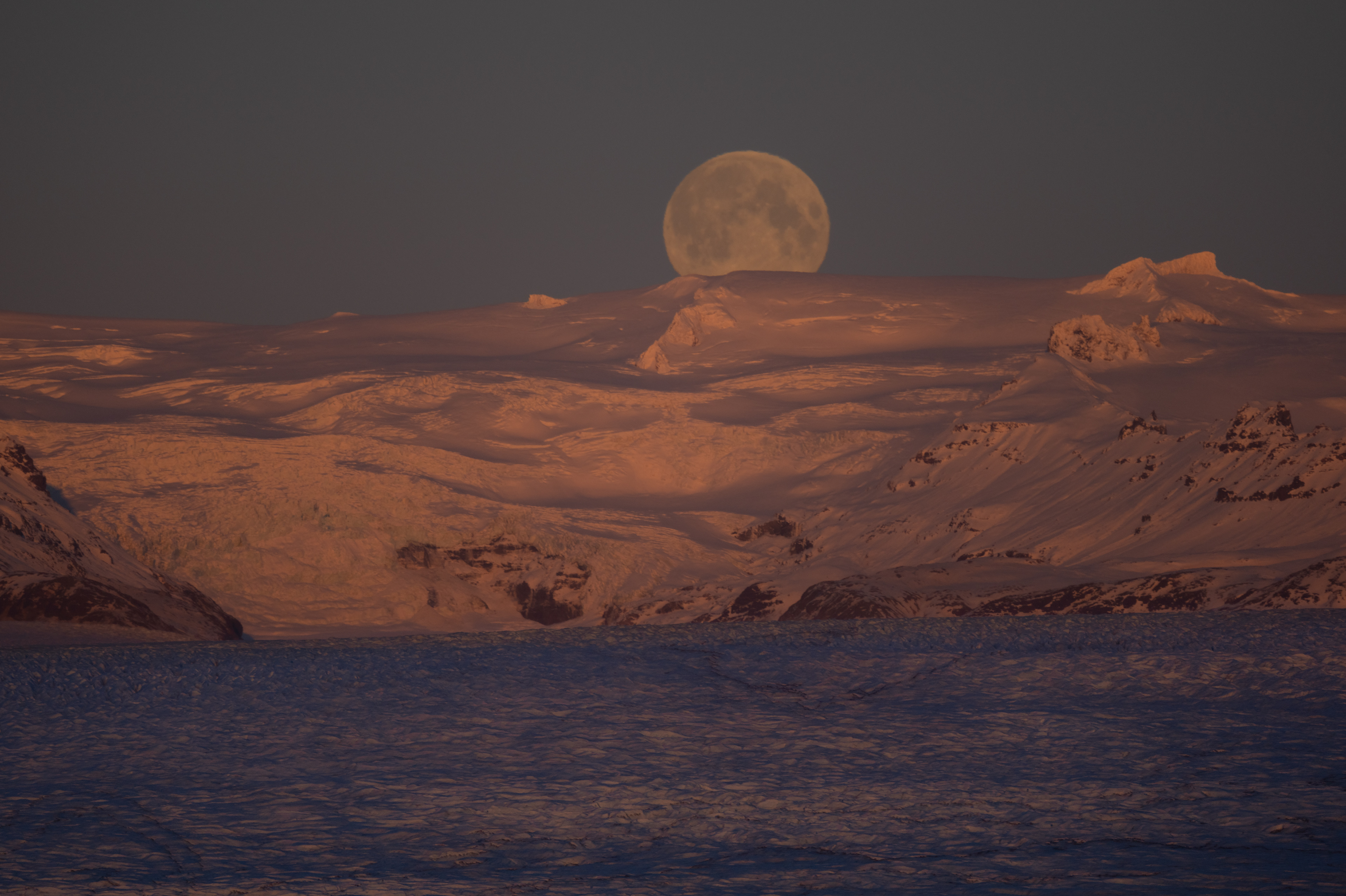
The moon escaping behind Breiðamerkurjjökull glacier by Jökulsárlón
Technically, photographing ice is all about restraint and precision. The ice is bright and reflective, and it contains delicate tonal detail that disappears fast if you expose carelessly. It is usually better to protect highlights and accept slightly darker water than to chase brightness and end up with dead, blown ice. The magic of Jökulsárlón is not just that it is white and blue; it is that it is full of fine structure, layered translucency, and subtle transitions, and those are the first things you lose when you push too hard. Long exposures can be beautiful when the wind is low, because they soften water and let the ice feel monumental. At the same time, faster shutter speeds can freeze splashes and drifting fragments when the lagoon becomes active and animated. Wildlife adds another layer that can lift a portfolio image beyond pure landscape. Seals often appear in the lagoon, and seabirds nest and feed in the surrounding area. They can provide scale, narrative, and life, but they also require patience and distance. The best wildlife moments at Jökulsárlón are usually quiet ones, when you let the animals move naturally through the scene rather than trying to force an encounter.
Despite its popularity, the practical side of visiting Jökulsárlón is still strangely underwhelming given how important the site is. Crowds are normal, and the best way to work around them is to arrive early or shoot late, especially in seasons with longer usable light. Facilities in the area have improved in some respects but remain limited relative to visitor numbers, so it is wise to arrive prepared if you plan to stay for hours. The place rewards time, and the more time you give it, the more it gives back. The most important mindset shift at Jökulsárlón is to stop treating it like a single famous viewpoint and start treating it like a system. Light, tide, wind, and ice behavior are not background variables here; they are the core of the subject. If you arrive, take the standard photo, and leave, you will have a record of a famous place. If you slow down and watch how the lagoon rearranges itself and how the light moves across the ice, you start making photographs that feel like they belong to you. Jökulsárlón is generous, but it does not reward rushing. It rewards attention. As you reflect on your journey to Jökulsárlón, consider what personal relationship you hope to foster with this ever-changing landscape. How will your attentiveness shape the stories you tell through the lens?